Image credit JAXA

The Zero-G AstroLab is a new facility at the University of Liverpool for advanced microgravity hardware-in-the-loop validation of spacecraft guidance, navigation and control (GNC) systems

We design autonomous spacecraft and robotics systems that rendezvous with asteroids, and test missions on Earth’s most advanced microgravity floor, strengthening global planetary defence and opening new opportunities in planetary resources.
How can intelligent spacecraft protect our planet and explore safely on their own?

As space becomes more crowded and missions venture further from Earth, spacecraft must make decisions independently, operate safely around hazards, and respond in real time. The Zero-G AstroLab was created to answer a critical question for the future of exploration: how do we build spacecraft that can think and act autonomously while protecting our planet? Founded and led by Dr Stefania Soldini, the lab is a unique microgravity simulation facility that enables hardware-in-the-loop testing of guidance, navigation and control systems before flight. The lab is home to the UK’s flattest floor and one of a kind in Europe; featuring free-floating robotic platforms and high-precision motion capture systems, it recreates the physics of space, enabling researchers to test spacecraft manoeuvres, rendezvous operations, and asteroid landings in realistic conditions. The team develops intelligent CubeSats, autonomous proximity operations, and advanced algorithms for navigation around complex bodies such as asteroids. These capabilities support applications including active debris removal, in-orbit servicing, swarm robotics, and deep-space exploration. Liverpool research directly strengthens global planetary defence through projects such as REMORA (REndezvous Mission for Orbital Reconstruction of Asteroids) – a fleet of self-driving CubeSats designed to attach to and track asteroids – and partnerships with international missions. These include the Japanese Aerospace Exploration Agency (JAXA)’s Hayabusha2, the NASA’s Double Asteroid Redirection Test, and the European Space Agency (ESA)’s Hera and Ramses missions. By combining robotics, astrodynamics and autonomy, the Zero-G AstroLab ensures spacecraft are smarter, safer, and ready to operate wherever exploration takes us.
State-of-the-art Precision Epoxy Floor Testbed
.jpeg)
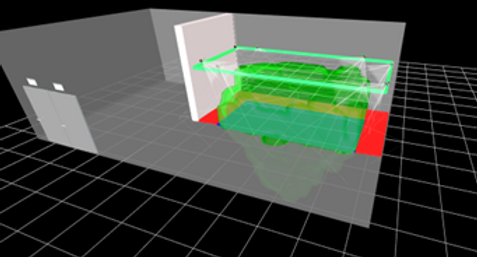
The Zero-G AstroLab is a 60 m² facility at the University of Liverpool. The facility consists of a manufacturing area for rapid prototyping and assembly of floating platform components, and a dedicated 3 x 5 m state-of-the-art precision epoxy floor testbed. It is, to the best of our knowledge, the flattest floor in the UK and one of its kind in Europe, with a mean flatness of 0.27 mm, and a maximum inclination of just ~0.022 mm/m. The floor has been independently certified by metrology specialists at Manchester Metrology.

Capture Camera System

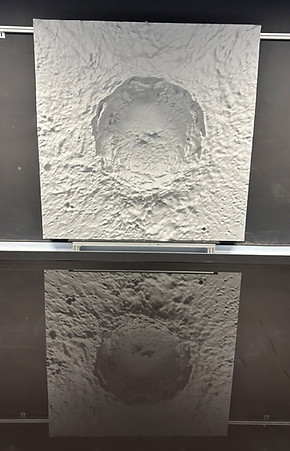
Mock-Up Terrain for Optical Navigation

Granite Testbed

BEATLE Platforms

Robotic Manufacturing Area and Ground Station Simulator
